What We Carry Forward: Yoga, the Bhagavad Gita, and the practice of giving
OCT. 31ST - NOV. 4TH, 2026
Please note - Application submission for this retreat is now closed.
This October, Shambhala Farm will offer a retreat with Tim Feldmann—using Mysore-style yoga practice, study of the Bhagavad Gita, and community to explore a single guiding question:
What happens when our actions are freed from personal gain?
The retreat is designed to help participants develop clarity around intention—how we aim ourselves toward life, and what motivates our choices. Each day is structured around three interwoven elements:
- Mysore practice to train attention and discipline
- Gita teachings to refine intention and discernment
- Shared time together to bring those ideas into real relationship
This retreat follows a give-what-you-can model. We’re doing this because we believe something important changes when practice is removed from transaction—when it becomes an act of shared responsibility rather than personal gain. What matters most is not that you pay, but what you carry forward.

Morning Mysore Practice
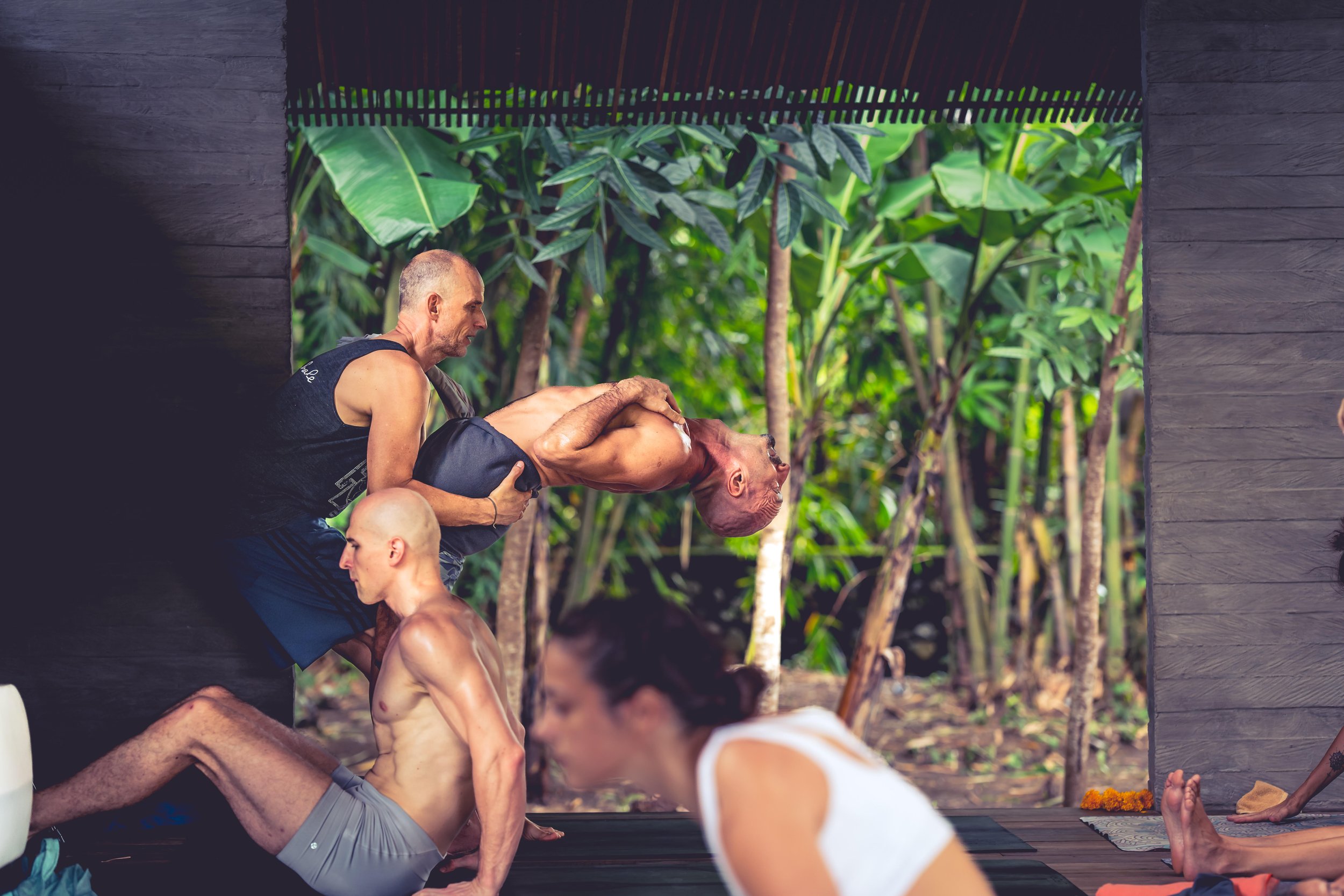
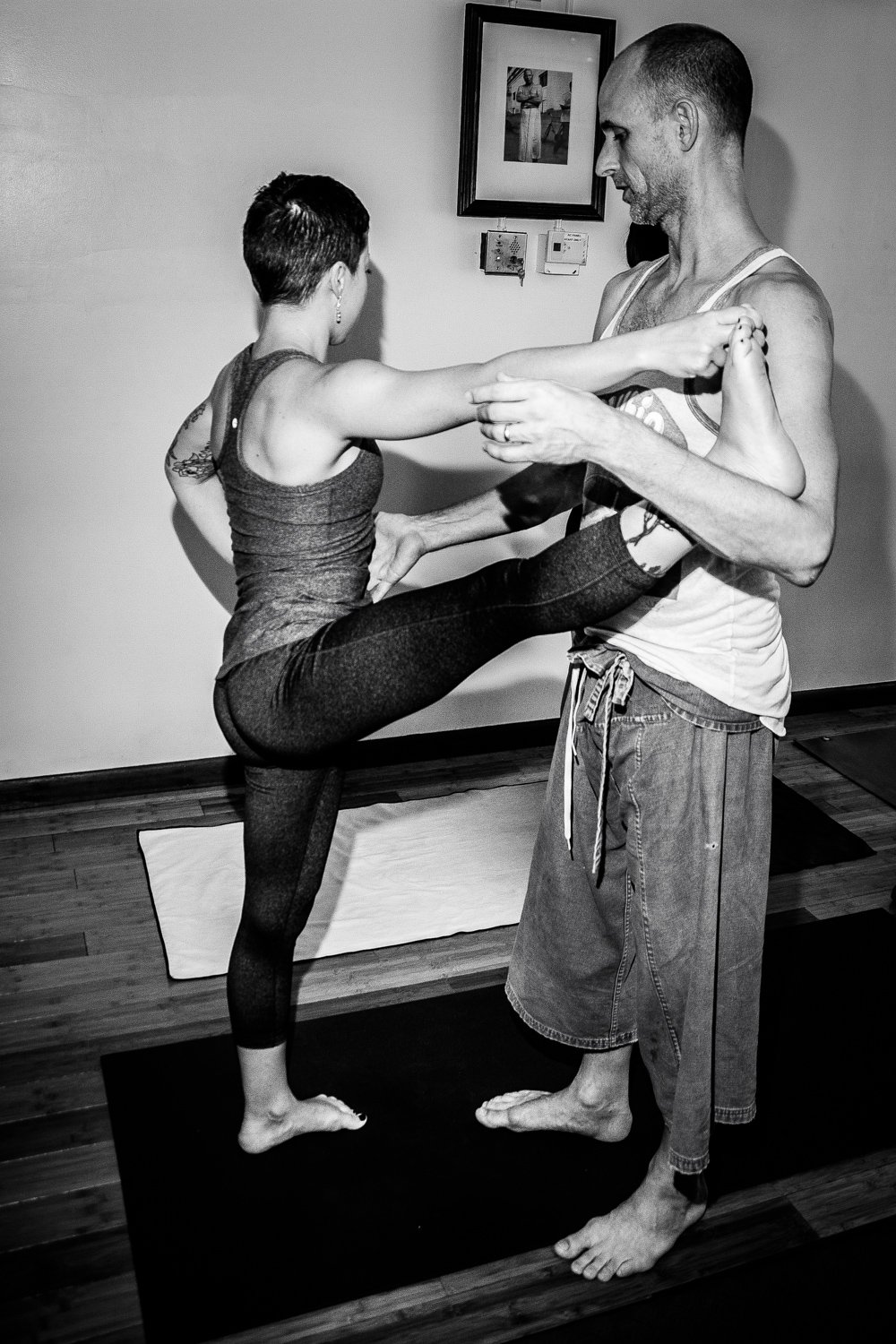
Each morning begins with Mysore-style Ashtanga yoga—the traditional method of practice taught in Mysore, India, and the way Ashtanga has been passed down for generations. Students move through the sequence they know at their own pace in a shared room, while Tim offers individualized support: refinements, adjustments, pacing, and next steps, appropriate to each practitioner.
Mysore practice is the retreat’s foundation. It trains steadiness, attention, and the ability to return—again and again—to breath, method, and honest effort. The morning practice isn’t simply physical preparation; it’s the first form of inquiry.
The Bhagavad Gita—practice beyond the mat
The philosophy component of the retreat centers on the Bhagavad Gita—one of yoga’s foundational texts on how to live with clarity, steadiness, and right intention in the middle of ordinary life. Rather than treating the Gita as abstract philosophy, Tim will teach it as a practical guide for understanding motivation: why we act, what drives us, and how intention shapes outcome. A key framework will be the Gita’s teaching on the three gunas—tamas (inertia/confusion), rajas (restlessness/striving), and sattva (clarity/balance)—as a way to recognize the “quality” behind our choices. The focus is not on mastering concepts, but on discernment: learning to notice when action is driven by ego, fear, or grasping, and how to refine that motivation toward clarity and service.
Community as Practice
Community is the retreat’s third pillar—not as a social extra, but as an essential part of the practice. We’ll share meals, take nature walks, and spend unstructured time together, alongside a few dedicated periods for conversation and reflection. Community is also where the retreat’s themes become real. Mysore practice trains attention. Gita study refines intention. Community reveals how that attention and intention behave in relationship. It’s one thing to explore generosity as a concept; it’s another to meet it in everyday interactions—in listening, in patience, in presence, in care. This retreat creates space for those qualities to become ordinary, and for practice to extend beyond the mat and into how we relate, support, and show up for one another.


ABOUT TIM
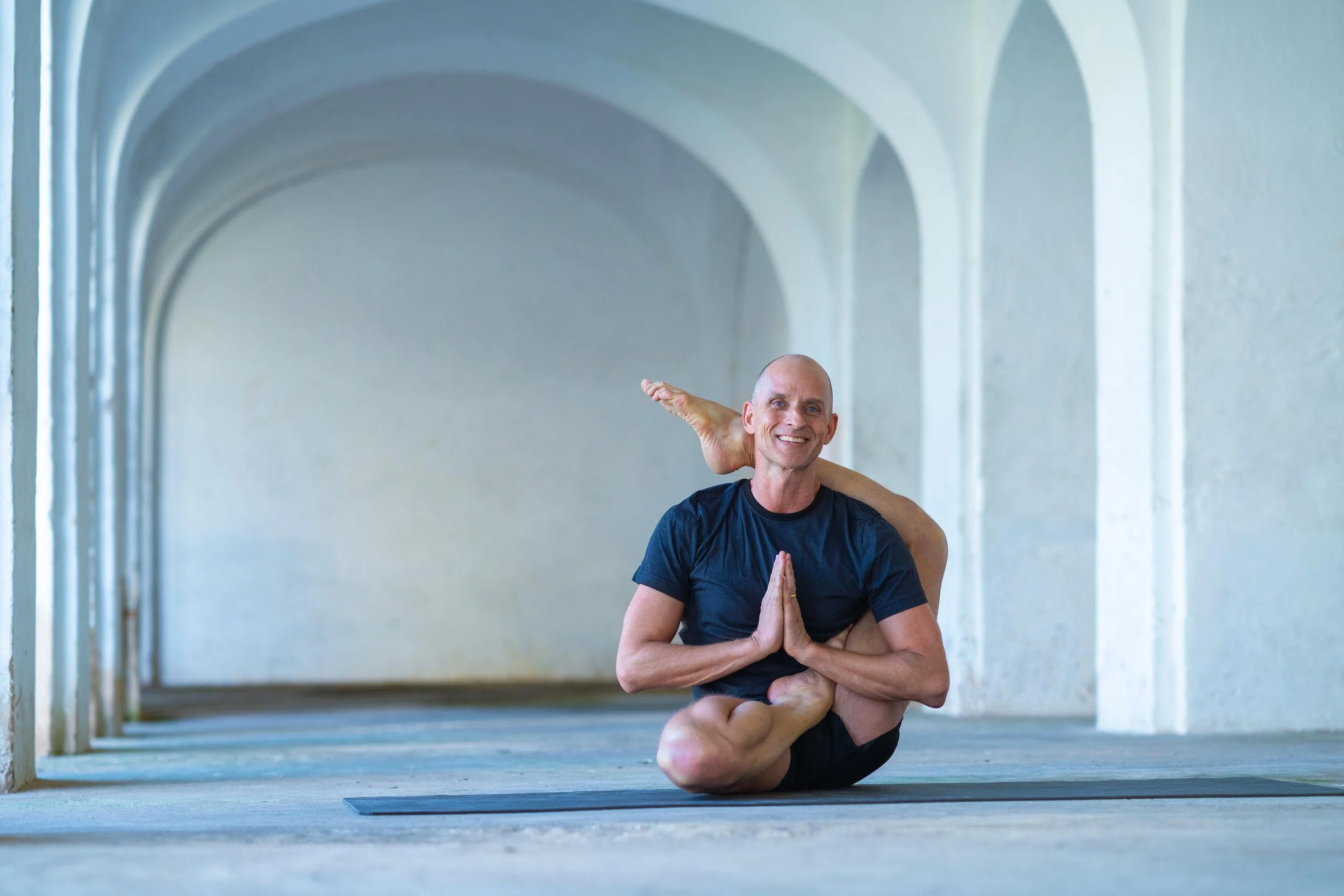
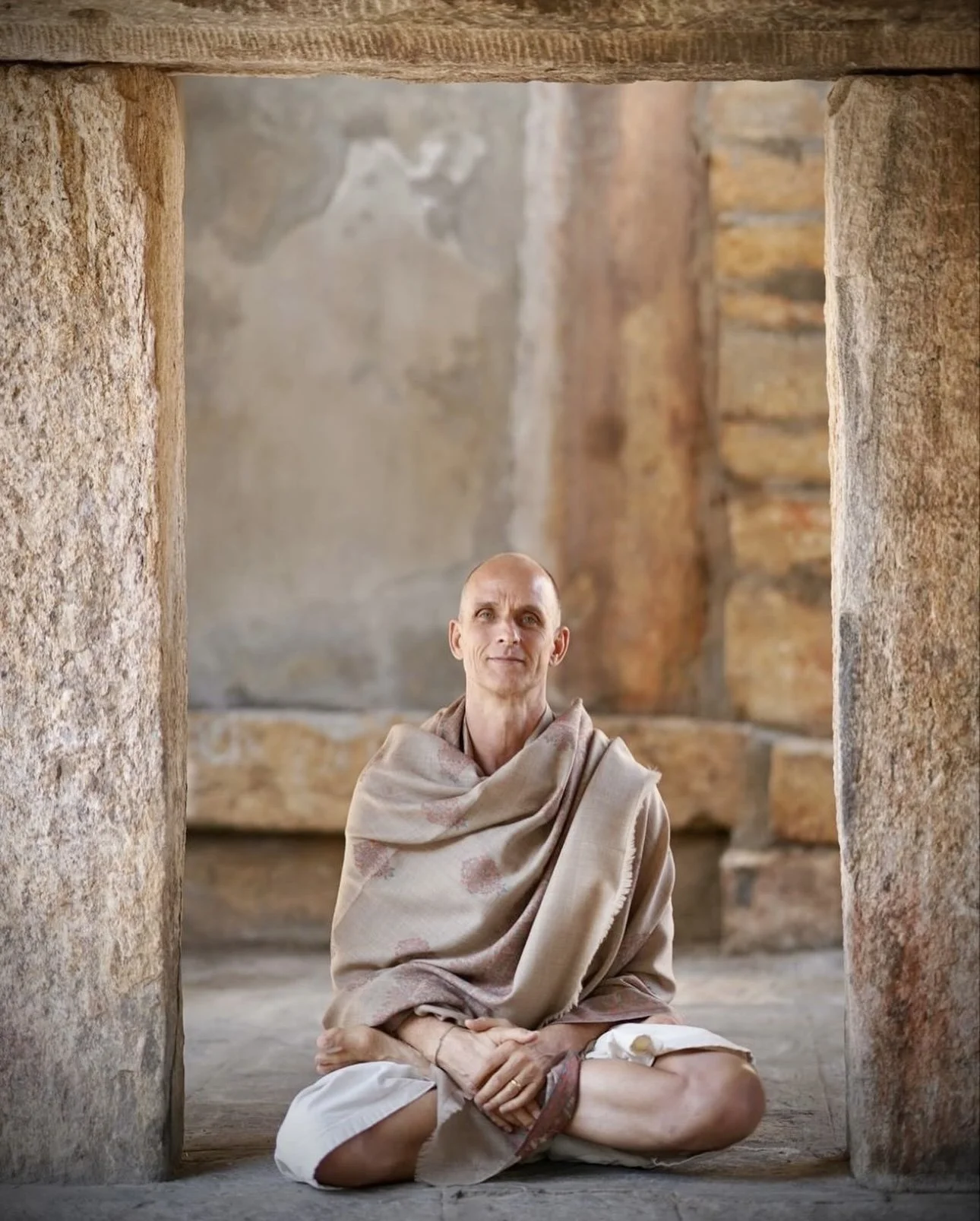
Tim Feldmann’s path to yoga began in 1994, shaped early on by a career as an international dancer and choreographer. That background continues to inform his teaching today, bringing a refined sensitivity to anatomy, alignment, and intelligent movement. What emerges is a practice that feels both precise and alive—rooted in structure, yet deeply human.
Since committing to the Ashtanga method in 1999, Tim has become one of its most respected senior teachers. He has been personally Authorized to teach by both K. Pattabhi Jois and R. Sharath Jois, Certified by Sharath Yoga Center in 2025, and is a practitioner of the Ashtanga Advanced A Series. For Tim, the traditional method is not simply a physical discipline, but a powerful vehicle for healing, insight, and self-realization.
Over the past decade, his work has expanded beyond the mat through immersive study of classical yogic philosophy, including Patañjali’s Yoga Sutras, Sankhya, the Bhagavad Gita, and Vedanta, under the guidance of distinguished scholars in South India. This scholarship deeply informs his teaching, allowing philosophy and practice to speak to one another in a way that feels grounded and accessible.
Globally recognized for his disciplined yet compassionate approach, Tim is known for his rigorous yet uplifting classes. He has a rare ability to make authentic Ashtanga accessible without softening its depth, encouraging students to cultivate steady practice, thoughtful study, and genuine devotion. At the heart of his work is a belief that yoga is a living tool—one that helps us navigate life with clarity, resilience, and a deeper understanding of what it means to be human.

VENUE
Shambhala Farm Yoga is located in the heart of Woodstock Village, inside a historic building with natural beauty. Our design preserves the soul of the space—high ceilings, rich wood trim, original hardwood floors, and two fireplaces—while layering in a sleek, modern aesthetic. The studio unfolds across multiple rooms, creating a sense of flow and openness. Decor is minimal and intentional, with clean lines and warmth. The result is a space that feels grounded, refined, and thoughtful.
TRAVEL
Traveling by Car
Woodstock, Vermont, is an easy, scenic drive from many parts of New England and the Northeast. From Boston, the trip is about 2 hours; from New York City, about 4 hours depending on traffic. The village is well-marked and easy to navigate once you arrive, with parking available throughout town and near the studio. Driving is the most flexible option if you’d like to explore the area before or after the workshop.
Traveling by Bus
The Dartmouth Coach offers direct service from both New York City and Boston to Hanover, New Hampshire. The ride is comfortable, reliable, and popular with travelers heading to the Upper Valley region. From the Hanover stop, Woodstock is about a 25-minute drive. You can arrange a rental car pickup in the area upon arrival or coordinate a carpool pick-up with fellow retreat attendees via our WhatsApp group chat.
Traveling by Airplane
Attendees can fly into several convenient airports: New York City (JFK, LaGuardia, or Newark), Hartford, CT (BDL), Boston, MA (BOS), or Burlington, VT (BTV). Burlington is the closest, a 1.5-hour drive; Boston and Hartford are each 2.5 hours away, and NYC airports are 4 hours out. From any of these locations, renting a car is the easiest way to reach Woodstock and offers flexibility during your stay. All major airports provide on-site rental cars for a smooth final leg of travel.
ACCOMMODATIONS
Woodstock offers a wide range of places to stay, from classic local inns to beautifully curated Airbnbs. We love The Woodstock Inn, The Vesper, The Jackson, The Shire, and The Woodstocker—all just steps from the studio. Kedron Valley Inn is a short ten-minute drive and home to Ransom Tavern, a standout wood-fired pizza spot worth building into your stay. Because this workshop falls at the tail end of foliage season, lodging fills quickly. It’s an especially beautiful time of year here, so we recommend booking as early as possible.
FOOD
Each morning after Mysore practice, we’ll gather at the studio for a catered, plant-focused breakfast. These shared meals are part of the experience—an easy way to slow down, connect, and let the days unfold together. We’ll also host one or two group dinners during the week, offered at no cost to you. Woodstock is full of great food, and our favorite local spots include Oaks & Evelyn (at The Jackson), Ransom Tavern (at Kedron Valley Inn), The Village Butcher, Santé, Farmer & the Bell, Worthy Kitchen, Ranch Camp, The Woodstock Farmers Market, Abracadabra Coffee, and Dreamscape Coffee. Whether you’re dining with the group or exploring on your own, you’ll be well fed here.
We’ll create a private WhatsApp group for all workshop attendees to make communication simple and seamless. This will be our central hub for updates and real-time logistics during the week—sharing directions, schedule changes, and gathering details—as well as a space to connect ahead of time. It’s a great way to ask questions, coordinate carpools, find lodging buddies, and start building community before we arrive. Participation is optional, but strongly encouraged, as it keeps everyone in the loop and helps the group feel connected from the start.